
Somewhere along the way, we built a version of manhood that was designed to break us. We were handed a blueprint that said strength meant silence, that toughness meant suppression, and that a real man never asked for help, never showed pain, and never admitted he was struggling. Generations of men lived by this code — and generations of men suffered because of it.
The statistics tell a story that silence cannot hide. Men account for nearly four out of every five suicides. Men are far less likely to seek mental health treatment than women. Boys who grow up without emotional guidance are more likely to struggle with aggression, substance abuse, and broken relationships in adulthood. The old blueprint is not just outdated — it is dangerous. And it is time we write a new one.
The Old Blueprint: What Boys Are Taught
From a very young age, boys receive messages about what it means to be a man. Some of these messages come from fathers, some from coaches, some from media, and some from the culture at large. While every upbringing is different, certain themes appear with disturbing consistency:
- Don't cry. Tears are treated as failure, not as a healthy emotional response. Boys learn to swallow grief, bury sadness, and mask pain behind anger or humor.
- Don't ask for help. Self-reliance is rewarded, even when it leads to isolation. Asking for support is framed as dependency, not wisdom.
- Be tough at all costs. Physical and emotional toughness are conflated. Boys learn that vulnerability is an invitation for exploitation.
- Provide, protect, perform. A man's value is measured by what he produces, not by who he is. Worth is conditional on output.
- Emotions are for women. The full spectrum of human emotion is gendered, and boys are given permission to feel only anger and confidence — everything else is off-limits.
These lessons are not always spoken directly. Often, they are absorbed through observation — watching a father who never expressed affection, hearing locker room conversations that mocked sensitivity, or seeing media portrayals where the hero always suffers in silence. The result is a generation of men who are emotionally illiterate, relationally disconnected, and quietly suffering.
What Boys Actually Need
The antidote to the old blueprint is not the elimination of strength — it is the expansion of it. Boys do not need to be taught that toughness is wrong. They need to be taught that toughness and tenderness can coexist. They need to see men who are strong enough to be vulnerable, brave enough to be honest, and secure enough to ask for help.
"The strongest man in the room is not the one who hides his pain. It is the one who has the courage to name it, face it, and grow through it."
What boys truly need are role models who demonstrate that emotional intelligence is not the opposite of masculinity — it is the highest expression of it. They need fathers, mentors, coaches, and brothers who show them what healthy manhood looks like in practice, not just in theory.
Emotional Intelligence as Strength
Emotional intelligence is the ability to recognize, understand, and manage your own emotions while also being attuned to the emotions of others. For too long, this has been dismissed as a "soft skill" — something nice to have but not essential for men. Nothing could be further from the truth.
Consider the man who can stay calm in a crisis — not because he is suppressing his fear, but because he has learned to process it in real time. Consider the father who can sit with his grieving son and say, "I feel that too," instead of "man up." Consider the leader who can read the room, sense tension, and address conflict before it destroys a team. These are not signs of weakness. These are demonstrations of mastery.
Emotional intelligence makes men better in every arena of life:
- In relationships: Men who can articulate their needs and listen to their partner's needs build deeper, more resilient bonds.
- In the workplace: Leaders with high emotional intelligence inspire loyalty, navigate conflict effectively, and create cultures of trust.
- In fatherhood: Emotionally intelligent fathers raise emotionally intelligent children — breaking cycles that have persisted for generations.
- In friendships: Men who can be honest about their struggles form the kind of brotherhood that sustains them through life's hardest seasons.
Role Models and Representation
You cannot become what you cannot see. One of the greatest challenges in redefining masculinity is the lack of visible, accessible role models who embody this new standard. Popular culture still largely celebrates the stoic action hero, the emotionally distant provider, and the man who handles everything on his own. While these archetypes are slowly evolving, progress is uneven.
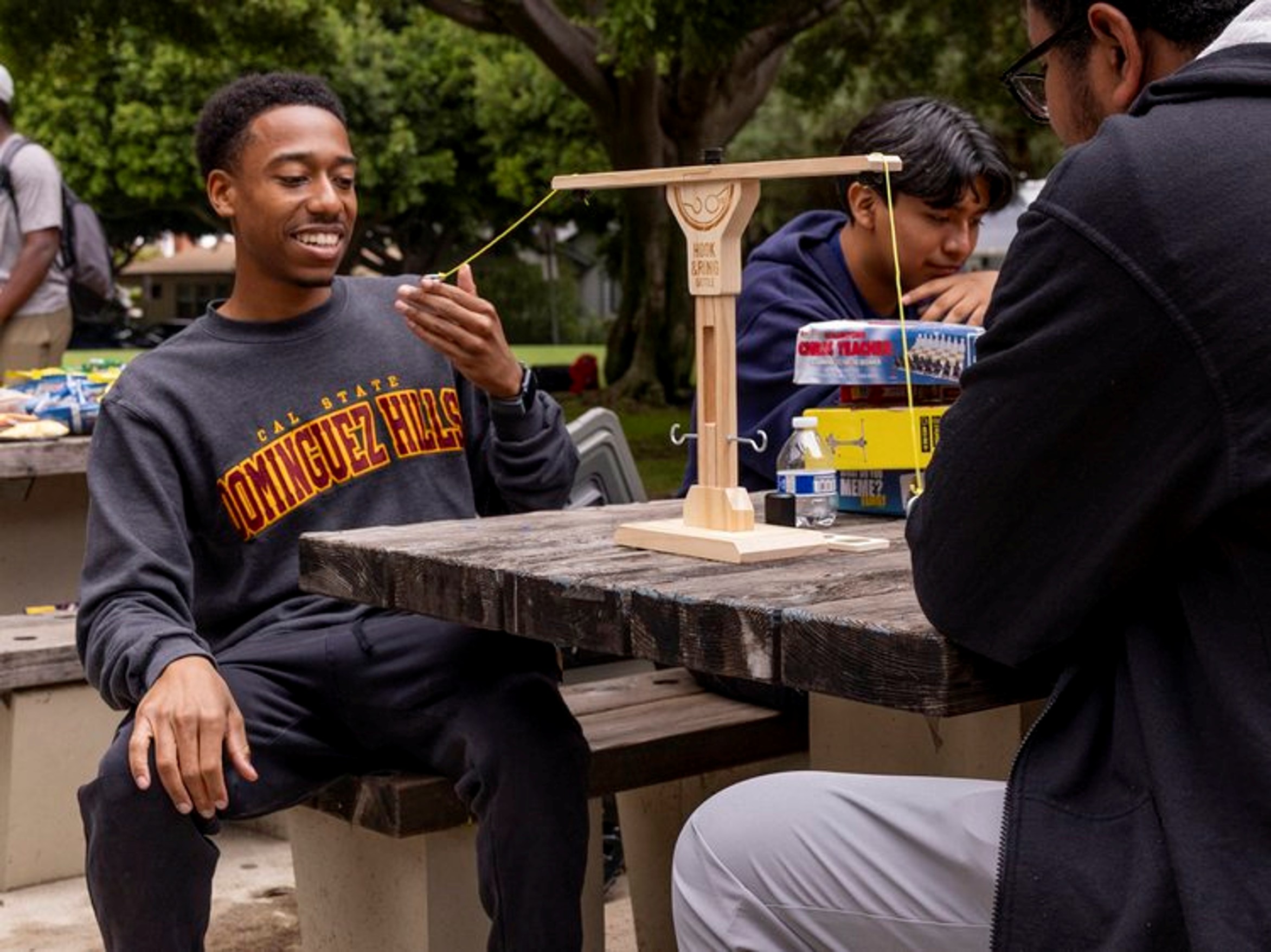
This is where intentional community becomes essential. When a young man walks into a Global Men's Group chapter and sees grown men embracing, sharing their struggles, holding each other accountable with love, and expressing gratitude without embarrassment — something shifts inside him. He sees a version of manhood that is both strong and sensitive, both disciplined and compassionate. He sees that he does not have to choose between being powerful and being present.
Representation matters not just in media but in the everyday spaces where boys and young men spend their time. In barbershops, on basketball courts, in classrooms, and around dinner tables — these are the places where masculinity is shaped. And these are the places where we must model something better.
How Global Men's Group Models Healthy Masculinity
At the Global Men's Group, redefining masculinity is not a slogan — it is a practice embedded in everything we do. Our chapter meetings are designed to create space for the full range of human experience. We open with check-ins that go beyond surface-level updates. We ask brothers how they are really doing. We sit in the discomfort of honest answers. And we respond with presence, not platitudes.
Our mentorship pairings intentionally model a different kind of man-to-man relationship — one built on trust, accountability, and emotional honesty. Our service projects teach men that giving is not a transaction but a transformation. Our leadership development programs equip men to lead with empathy, integrity, and courage.
Every gathering is a living example of what masculinity can look like when it is freed from the constraints of the old blueprint. Men laugh freely, speak honestly, support fiercely, and challenge lovingly. It is not perfect. It is not easy. But it is real. And it is working.
Our Responsibility to the Next Generation
We did not choose the blueprint we were handed. But we can choose the one we pass on. Every interaction a man has with a younger person is an opportunity to model something better — to show that asking for help is courageous, that expressing emotion is healthy, and that true strength is measured not by what you endure in silence but by what you face with honesty.
The next generation is watching. They are watching how we treat our partners. They are watching how we respond to failure. They are watching whether we practice what we preach. And they are deciding, consciously or not, what kind of men they want to become.
"We do not inherit masculinity from our fathers. We redefine it with every choice we make — and in doing so, we give the next generation permission to do the same."
The old blueprint told us that real men are silent, stoic, and self-sufficient. The new blueprint says real men are honest, connected, and brave enough to be vulnerable. It says that the strongest thing a man can do is not to carry everything alone — but to build a brotherhood where no man has to.
This is the work of the Global Men's Group. This is the mission that drives every chapter, every meeting, every mentorship. And this is the legacy we are building — not just for ourselves, but for every young man who deserves to know that strength and silence are not the same thing.
Iron Sharpens Iron. Stronger Together.